Reliable connectivity can make a meaningful difference in communities, supporting access to education, economic opportunities, emergency preparedness and essential services. Yet across Canada’s Arctic and other remote regions, geography and infrastructure challenges can make reliable high-speed connectivity difficult to deliver.
PomeGran is supporting research that could help deepen our understanding of how emerging satellite technologies can address that challenge.
As part of our commitment to supporting stronger, better-connected communities, PomeGran is loaning OneWeb user terminals to the University of Victoria Centre for Aerospace Research (UVic CfAR) for PolarLink, a research mission studying the performance and potential of low Earth orbit (LEO) satellite constellations as connectivity solutions for Canada.
Researching Connectivity in Canada’s North
Developed by UVic CfAR under contract with Defence Research and Development Canada (DRDC), the project combines space-based and ground-based research to explore the capabilities of LEO satellite networks.
As part of the mission, UVic CfAR is developing an 8U CubeSat called PolarLink that will communicate with LEO constellations in orbit through optical intersatellite links. The spacecraft will also communicate with assets on the ground through optical and radio frequency communication links.
The project also includes a ground-based research campaign focused on understanding how commercially available LEO networks perform, particularly in Arctic environments.
This research is important because connectivity in Canada’s North presents unique challenges. Traditional solutions can be difficult to implement in polar regions, while LEO satellite networks offer another potential way to reach communities where terrestrial infrastructure is limited or challenging to deploy.
PolarLink will help researchers better understand that potential with the support of research on the ground.
Using commercially available user terminals, the UVic CfAR team will study network performance across measures including latency, throughput and outage events. The findings will help evaluate the effectiveness of LEO constellations as a connectivity solution for Arctic regions and identify areas where these networks could potentially be improved.
PomeGran’s Contribution
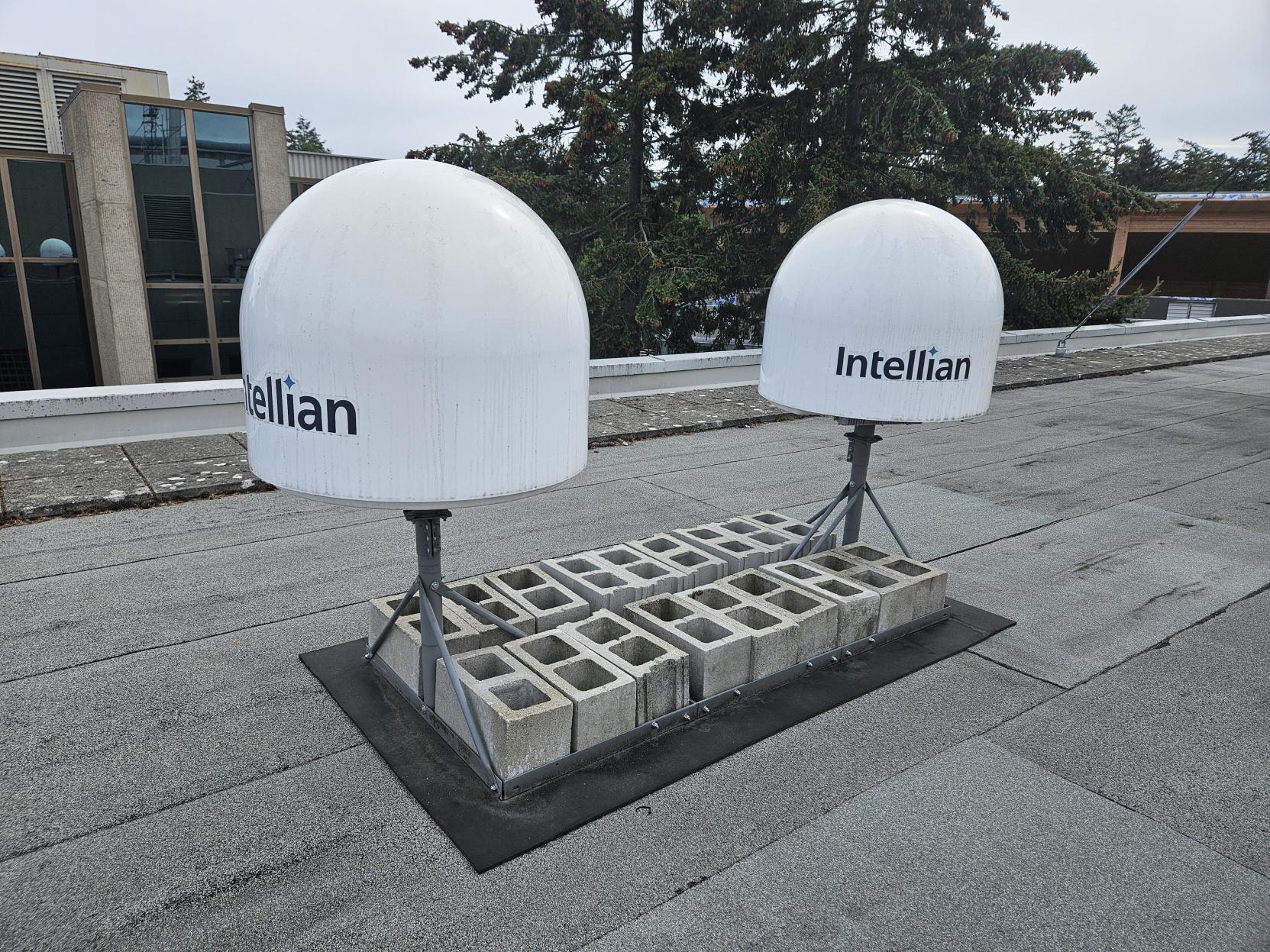
PomeGran is providing OneWeb terminals on loan to support UVic CfAR’s ground-based research. The equipment will provide UVic CfAR with an additional test node, expanding its ability to collect network measurements and assess LEO performance.
For PomeGran, the collaboration reflects an important part of our approach to ESG: using our capabilities and resources to support initiatives that can contribute to stronger and more connected communities.
“Canada’s connectivity challenges cannot be solved by technology alone. They require research, collaboration and a deeper understanding of how different solutions perform in the communities and environments where they are needed most. Supporting UVic CfAR’s LEO satellite research is an opportunity for PomeGran to contribute to that work and to the broader goal of connecting underserved communities across Canada.”
— Kalai S. Kalaichelvan, Chairman & CEO, PomeGran Inc.
Connectivity with Purpose
PomeGran’s work is rooted in the belief that access to reliable digital infrastructure can create opportunities and strengthen communities.
Collaborations like this one allow us to support Canadian research while contributing resources that can help researchers better understand the technologies shaping the future of connectivity.
As PolarLink moves forward, its research will add valuable insight into how LEO satellite networks perform in challenging environments and the role they could play in Canada’s evolving connectivity landscape.
We are proud to support UVic CfAR’s work and look forward to seeing where the PolarLink mission leads.